
Quality control, and the limits of a free check
GuaBase calls its own warehouse check “not authentication” in writing. Here is what it does cover, and what to do with a QC photo before it becomes a shipped parcel.
What the free warehouse check covers
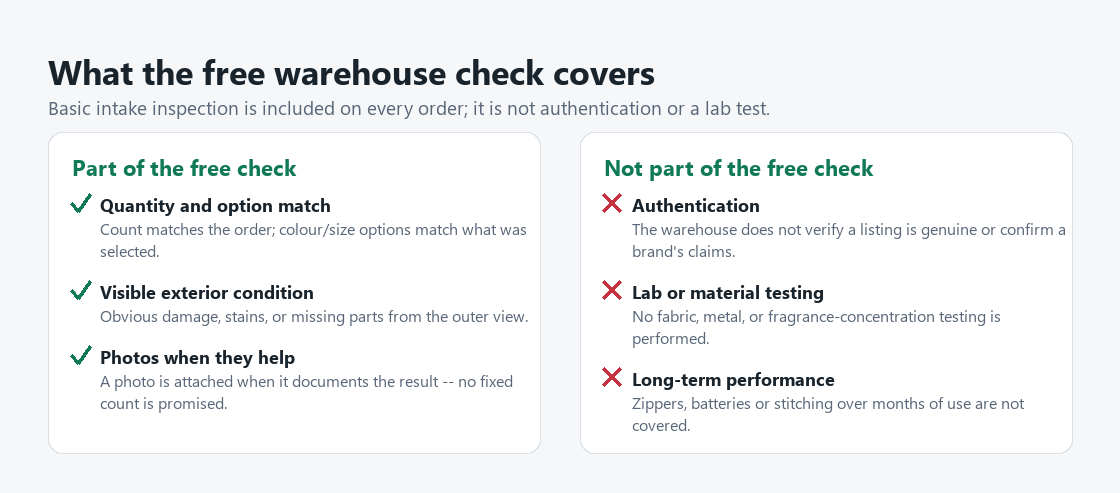
Every order gets a basic inspection at intake, with no separate charge for it. GuaBase's own wording for what that covers is specific: quantities, selected options, and visible issues, with a photo attached “when they help document the result”, not against a fixed per-item count GuaBase has committed to in writing.
What it is not is just as specific. GuaBase states this directly in its Help Center: “This is not authentication, laboratory testing, or a guarantee of internal condition or long-term performance.” That line is worth reading twice before assuming a passed QC check means a verified-genuine or structurally sound item, it means the obvious, visible things were looked at and matched the order.
In practice that boundary matters most for two categories: branded goods, where a passed inspection says nothing about whether the item is an authorised product, and electronics, where a basic check can confirm the right model and accessories arrived but cannot run a load test, check battery health over time, or verify every included cable actually works. Neither gap is unusual for a shipping-and-fulfillment service; it is just worth knowing before treating “passed intake” as equivalent to a full product review.
GuaBase also does not publish a fixed inspection checklist item by item, the categories above (quantity, options, visible condition) are the stated scope, not a longer internal list this site has visibility into. If a specific concern matters for an order, such as a fragile item needing extra padding or a electronics item needing a function check, GuaBase's own guidance is to record that requirement in the order notes before payment rather than assume the warehouse will catch it unprompted.
Reading a QC note before you approve it
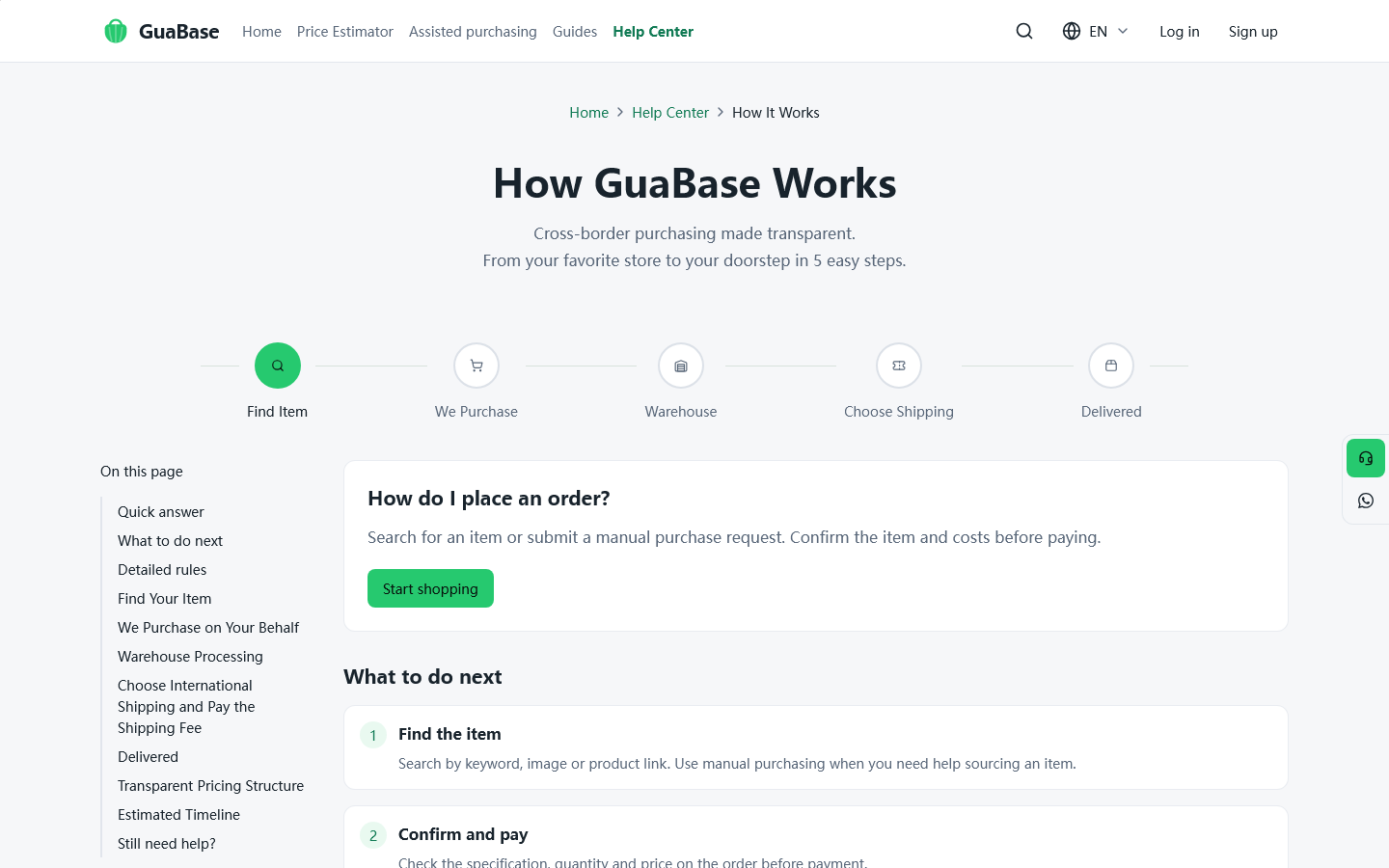
GuaBase's five-stage overview of the whole order, Find Item, We Purchase, Warehouse, Choose Shipping, Delivered, places “Warehouse Processing” as its own stage, separate from shipping. That stage is also where an order status can change to “Partially Arrived” (some items in, others still in transit) or “Stored” (everything in, basic check passed).
If a photo is attached to an item at this stage, it is worth opening before doing anything else, including before choosing a shipping option. An item that does not match what was ordered, or shows visible damage, is marked “QC Failed” rather than quietly passed through; that status is the trigger for a refund conversation, not the parcel stage.
GuaBase's own guidance is to raise a problem with support before creating the international parcel, not after. Once a parcel is packed, consolidated with other items, and shipped, separating out a single disputed item becomes a different, harder conversation than catching it at the warehouse stage.
None of this replaces checking the listing itself before you buy, see Buying Safely for what to look at on the seller's page before an item ever reaches a warehouse.
For an order with more than one item, the Partially Arrived status is worth watching rather than ignoring until everything shows up. It means some items have already passed intake while others are still in domestic transit, and an early look at what has already arrived can surface a problem with one item well before the rest of the order is anywhere near ready to ship.
Consolidation adds one more reason to review photos promptly: once several items are packed into a single outgoing parcel, isolating a problem with just one of them becomes a separate, slower process than it would have been at the Stored stage, where each item is still handled on its own.
GuaBase's own “Transparent Pricing Structure” framing, repeated across several of its help pages, ties directly back to this stage: it states plainly that it does not add markup to item prices shown in its purchasing system, and that the final item cost is confirmed by the seller at the point of purchase, not estimated beforehand. A QC note is, in effect, the first point after that purchase where a shopper can independently verify what actually arrived matches what was confirmed.